Stop buying expensive specialty paints! With a few basics from your pantry and hardware store, like plaster of Paris, baking soda, school glue and joint compound, you can make chalk paint, textured paints, stencil pastes, gesso, crackle and more. Here are my favourite DIY paint recipes that really work.
Quick tip: always mix small batches, stir well, and store leftovers in an airtight container.
Chalk Paint & Furniture Paints
Classic homemade chalk paint: 1 cup flat or matte latex paint, 1/3 cup plaster of Paris and 1/3 cup warm water. Full tutorial: homemade chalk paint.
Joint compound chalk paint: 1 cup matte or satin latex paint, 2 tablespoons joint compound and 1 to 2 tablespoons water. It goes on ultra smooth with amazing adhesion. This has become my new go-to!
One-step furniture paint: Equal amounts of plaster of Paris paste (plaster mixed with water), paint and water-based Polycrylic. It's primer, paint and sealer in one, and very durable.
Homemade chalkboard paint: 1 cup black latex paint with 2 heaping tablespoons of plaster of Paris.
Textured Paints
Baking soda paint: A 1:1 ratio, like 1/4 cup latex paint to 1/4 cup baking soda, for a fluffy, grainy ceramic look. More here: DIY baking soda paint.
Fluffy baking powder paint: About 1 tablespoon of baking powder in 1/2 cup of latex paint. It rises and goes "moussey" when it meets moisture.
Salt wash paint: 1/2 cup latex paint, 1/2 tablespoon plaster of Paris and 1 tablespoon pickling salt for a coastal, chippy look.
Sand paint: Plaster of Paris mixed with warm water, acrylic paint and sand for a terracotta-style finish.
Coffee grind paint: 1/4 cup plaster of Paris and 2 tablespoons warm water, plus your paint and dried coffee grounds for an aged texture.
Sawdust paint: Plaster of Paris, a little water, paint and sawdust from your saw for a heavy, rustic texture. Dab with the side of your brush.
Salt and pepper stone paint: A grainy, faux cement look that's perfect for planters.
Stencil Pastes
Textured stencil paste: 3 tablespoons baking soda, 1 tablespoon Elmer's school glue and 1 tablespoon of your paint. It keeps in an airtight container.
Metallic stencil paste: 1 tablespoon joint compound, 1 teaspoon silver acrylic paint and 1/2 teaspoon school glue.
Primers, Mediums & Finishes
Homemade gesso: A canvas primer made with warm water and school glue (two parts water to one part glue) plus a few pantry basics.
Homemade clear gesso: 1/4 cup school glue, 1/8 cup warm water and 1 tablespoon cornstarch. It's perfect when you want the original surface to show through.
School glue crackle: One part water to two parts glue, mixed until it's syrupy. Brush it on, then paint over it.
Clear crackle finish: Seal inkjet prints with hairspray first so the ink doesn't run.
Egg tempera paint: An egg yolk with 2 teaspoons water, 1 teaspoon vinegar and your pigment. It's a historic paint you can make at home.
DIY fabric paint: 1 tablespoon acrylic paint, 1/2 tablespoon Mod Podge and 1/2 tablespoon fabric softener, so it stays soft instead of crunchy. Hand wash only.
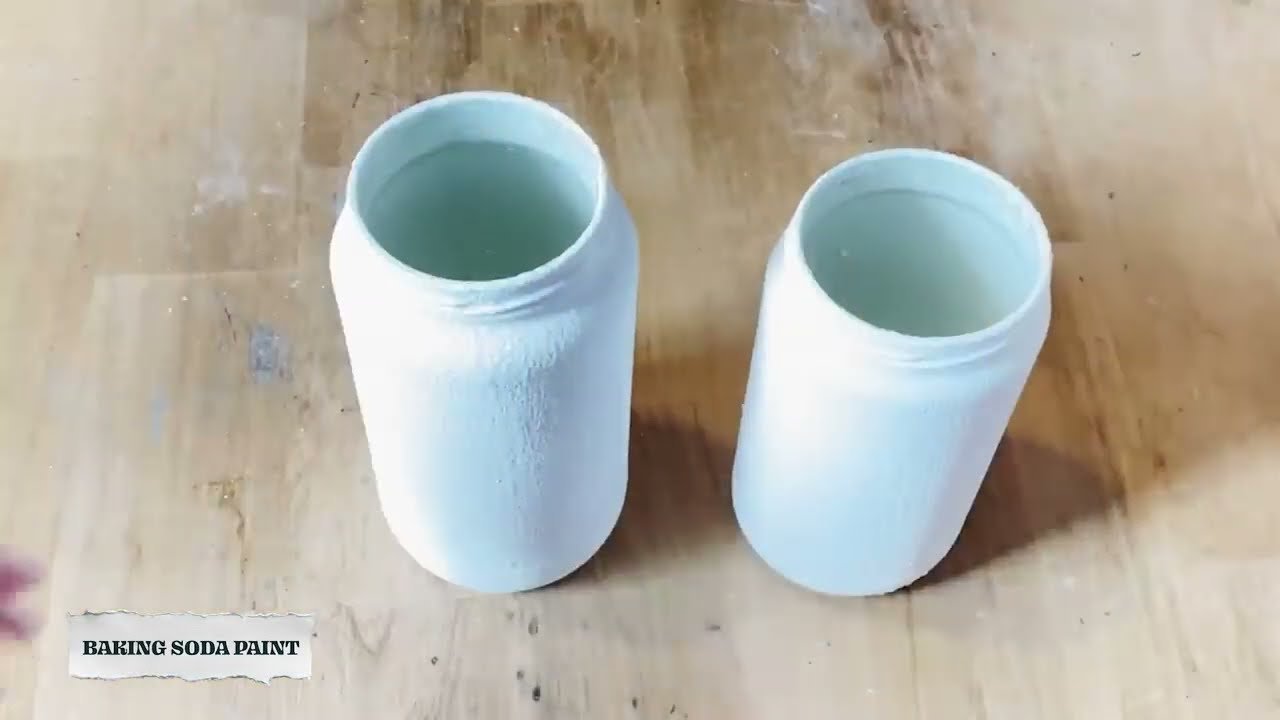
Painting Glass
Painting glass without chipping: Scrub in hot soapy water, then wipe with rubbing alcohol to remove every trace of grease before painting.
Tinted glass (umber or amber): Tint clear glass any colour you like for a vintage look.
Faux milk glass: Give clear thrifted glass a soft, vintage milk glass finish.
My Best Tips
Use warm water with plaster of Paris. It mixes in much more smoothly.
Flat or matte latex works best for chalk paint recipes.
Paint testers from the hardware store are perfect for small batches.
Label your jars so you remember which recipe is which!
Want more? Try my guide to painting glass jars, the hairspray chippy paint technique and my crackle technique.
If you give it a try, I'd love to see how it turns out! Tag me @OurUpcycledLife on social media. I always enjoy seeing your beautiful creations. 💕 Until next time, happy crafting!